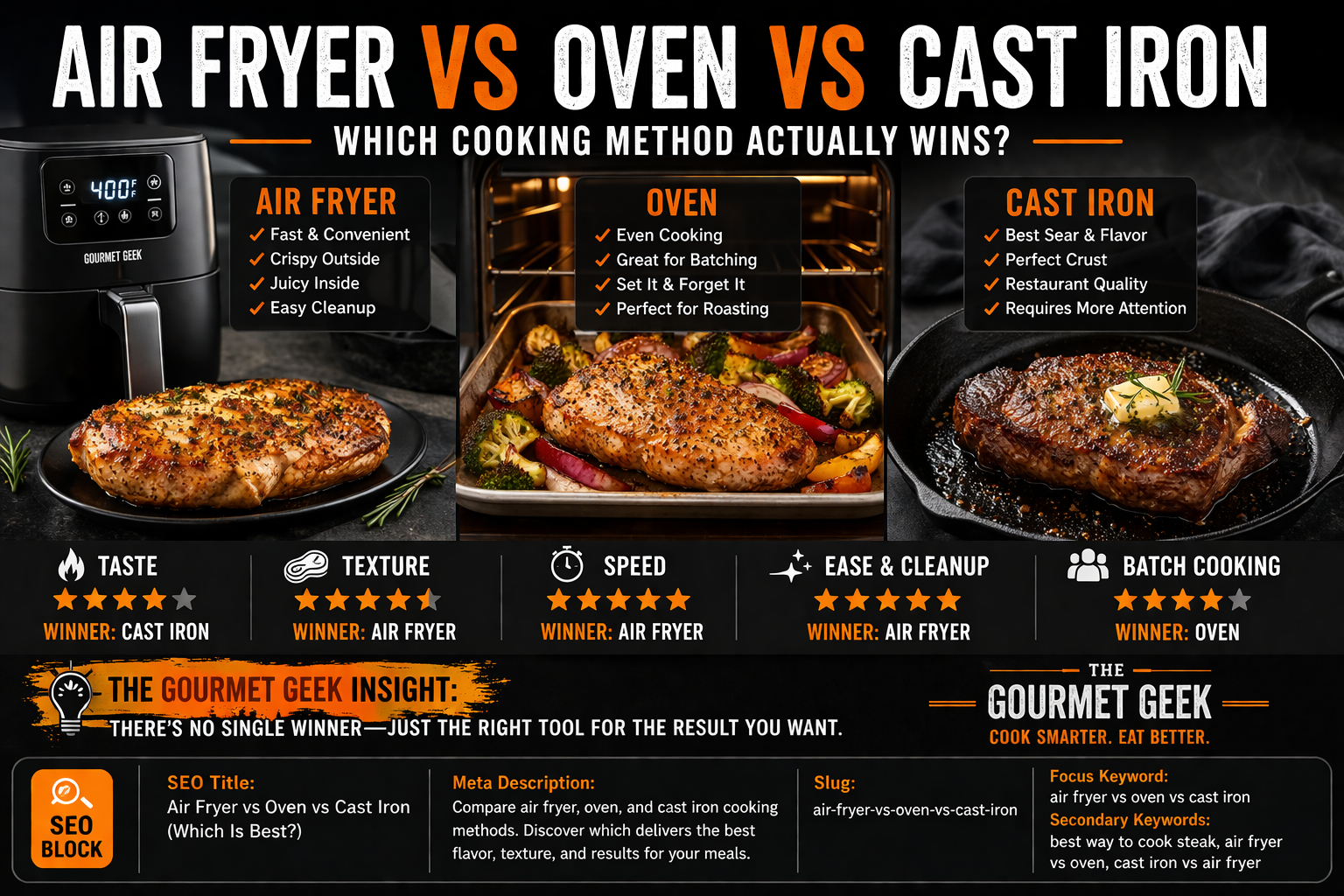
There is no one best way to cook dinner. There is only the best method for the result you want: crisp edges, a deep sear, easy cleanup, batch cooking, or a meal that hits the table before everyone starts circling the kitchen.
That is why the air fryer vs. oven vs. cast iron argument usually goes sideways. People defend the tool they love instead of asking the better question: what kind of heat does this food need?
Once you look at it that way, the answer gets much more useful. Cast iron is not competing with the air fryer for the same job. The oven is not outdated just because the air fryer is faster. Each method has a lane, and smart cooking is mostly about choosing the right lane before you start.
The Quick Answer
- Use the air fryer when you want speed, crisp texture, small-batch cooking, and easy cleanup.
- Use the oven when you need even heat, larger portions, sheet-pan meals, baking, or meal prep.
- Use cast iron when browning, crust, pan sauce, or steakhouse flavor is the whole point.
The tool is not the strategy. Heat is the strategy.
Why This Debate Gets So Heated
Most home cooks have a favorite tool because that tool solved a real problem for them. The air fryer makes leftovers exciting again. The oven handles a full tray of food without babysitting. Cast iron gives you that deep, savory browning that makes a simple piece of meat taste like a restaurant meal.
The trouble starts when we expect one method to do every job. An air fryer can make a surprisingly good steak, but it will not create the same contact-seared crust as a hot skillet. Cast iron can make amazing chicken, but it asks more of you: preheating, oil control, timing, and cleanup. The oven is steady and forgiving, but it is rarely the fastest choice for one or two portions.
So instead of crowning one winner, let us break down what each one actually does well.
Air Fryer: Fast Convection in a Small Space
An air fryer is basically a compact convection oven with aggressive airflow. That small cooking chamber matters. Food is close to the heat source, air moves quickly, and moisture can escape fast enough to help the surface crisp.
That makes the air fryer excellent for weeknight cooking. Chicken tenders, salmon portions, roasted vegetables, fries, reheated pizza, and small cuts of meat all benefit from the speed and airflow. It is also less intimidating than a skillet full of hot oil or a big oven preheat when you are only cooking for one or two people.
The limitation is contact. Browning from moving hot air is good, but it is not the same as food pressing directly against screaming-hot metal. If your goal is maximum crust, the air fryer gets you close. Cast iron still wins.
Oven: The Reliable Workhorse
The oven is slower, but it is still the best choice when consistency and volume matter. If you are cooking four chicken breasts, a tray of vegetables, a casserole, or anything that needs steady surrounding heat, the oven earns its space.
The oven is also more forgiving for meal prep because it gives you room. Food can spread out. Heat surrounds the pan. You can cook multiple portions without crowding a basket or flipping in batches.
Where the oven struggles is speed and surface texture. Unless you use broil, convection, a rack, or a very hot pan, oven food can come out evenly cooked but a little quiet. It is reliable, not flashy.
Cast Iron: The Flavor Builder
Cast iron wins when browning is the assignment. Direct contact heat creates the Maillard reaction: that deep, savory crust that makes steak, burgers, pork chops, mushrooms, and chicken thighs taste richer.
It also gives you a bonus the air fryer and oven do not: fond. Those browned bits left in the pan can become a quick sauce with a splash of broth, wine, lemon juice, or even a little water and butter. That is a big deal if you want food that tastes cooked, not just heated.
The tradeoff is attention. Cast iron needs preheating, oil management, smoke control, and cleanup. It is worth it for certain meals. It is overkill for others.
The Real Comparison
- Best flavor: Cast iron, because direct contact browning builds the deepest crust.
- Best speed: Air fryer, especially for one or two portions.
- Best cleanup: Air fryer, assuming the basket is not overloaded or sticky.
- Best for families: Oven, because space matters.
- Best texture control: Cast iron, if you are willing to watch the pan.
- Best everyday default: Air fryer for small meals, oven for batches.
When to Combine Methods
The best cooks are not loyal to one tool. They stack methods. A thick steak can start gently in the oven or air fryer, then finish in cast iron for crust. Chicken wings can cook through in the air fryer, then get a quick toss in sauce. Vegetables can roast in the oven and finish under the broiler for color.
That is the move: use one method for doneness and another for texture. Once you separate those two jobs, cooking gets a lot easier.
Common Mistakes
- Expecting air fryer food to sear like cast iron. Airflow browns; contact sears.
- Using the oven for tiny batches. It works, but it is often slower than necessary.
- Overcrowding the air fryer basket. Crowding traps steam and kills crispness.
- Overheating cast iron. Hot is good. Smoking-hot with delicate food is a burned dinner waiting to happen.
- Choosing the tool after the food is already cooking. Decide what result you want first.
The Gourmet Geek Verdict
If you want one simple rule, use this: air fryer for speed, oven for volume, cast iron for crust.
That rule will not answer every cooking question, but it will stop most of the guessing. And that is the whole point. Better cooking does not come from owning every gadget. It comes from understanding what each tool is good at and using it on purpose.
That is cooking like a Gourmet Geek: practical, curious, and a little obsessive about making dinner better.