
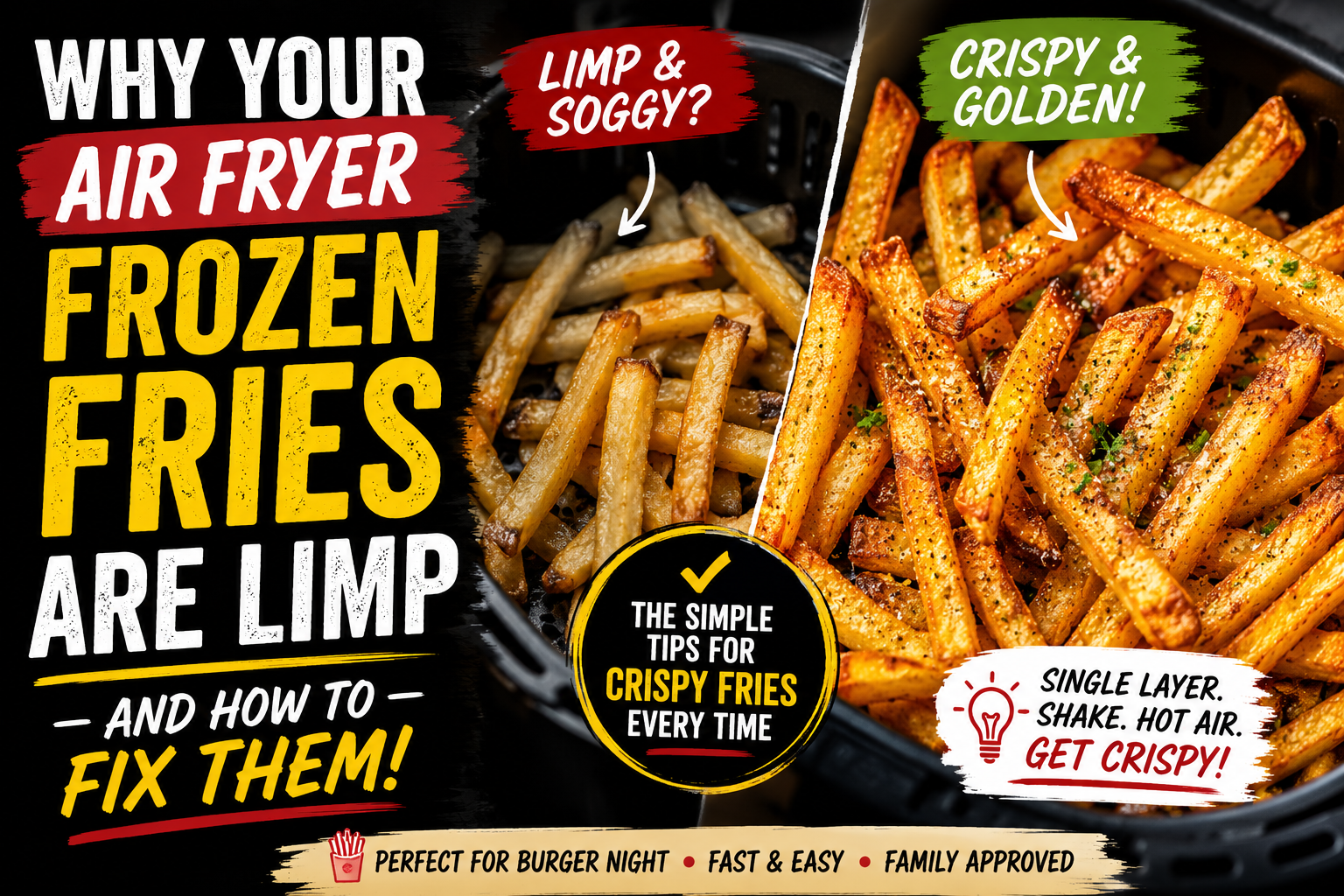
Frozen fries should be one of the great promises of the air fryer.
Open bag. Pour fries. Push button. Become hero.
That is the dream, anyway.
But sometimes the air fryer has other plans. Instead of crisp, golden fries, you get a sad little basket of bendy potato sticks. They are hot, technically cooked, and maybe even a little browned in spots, but they do not have that satisfying fry-shop crunch.
They flop. They sag. They taste like they considered becoming crispy, then lost interest halfway through.
The good news is that limp air fryer fries are usually not a potato problem. They are an airflow problem.
The air fryer can absolutely make frozen fries crispy, but it needs space, heat, and a little movement. Once you understand what is going wrong, the fix is simple.
Let’s rescue those fries.
Why Frozen Fries Steam Instead of Crisp
The whole point of an air fryer is moving hot air. That fast-moving air dries the surface of the food and helps it crisp.
But frozen fries bring two challenges with them.
First, they are frozen, which means they release moisture as they heat. Second, they are easy to overcrowd because they look small and innocent when you dump them into the basket.
That is where things go sideways.
When too many fries are piled together, the hot air cannot reach all the surfaces. The fries trapped underneath start steaming instead of crisping. They soften, slump, and come out tasting more like oven fries from a school cafeteria than the crispy little miracles we were promised.
A crowded basket turns your air fryer into a tiny potato sauna.
And while I support relaxation in general, fries are not here for spa day.
The Single-Layer Rule
If you want crispy fries, give them room.
A true single layer is best. That means the fries are spread out across the basket with some space for air to move around them. A little overlap is not the end of the world, but a thick pile is where crispiness goes to die.
I know this is annoying because the bag says there are several servings and your air fryer basket says, “Sure, I can hold that.” Technically, it can. But holding fries and crisping fries are two different jobs.
For the best results, cook frozen fries in batches if you need to. The first batch can stay warm on a sheet pan in a low oven while the second batch cooks. Or just accept that the first batch is for “quality control,” which is a very serious culinary responsibility.
If you are making fries for burger night, the single-layer rule matters even more. Burgers already bring enough chaos. The fries should not be the weak link.
Basket Shaking vs. Flipping
Frozen fries do not need delicate handling. They need a good shake.
About halfway through cooking, pull out the basket and shake the fries around. This helps move the less-crispy fries to the top and gives more surfaces a chance to meet the hot air.
If you are cooking thicker fries, wedges, or potato skins, you may want to use tongs and flip them more intentionally. But for standard frozen fries, a basket shake usually does the job.
The key is not to shake once at the very end and hope for redemption. At that point, the fries have already made their life choices.
Shake halfway through. If the basket is a little crowded, shake again near the end. You are not babysitting them. You are just making sure everyone gets a turn in the hot air.
Do You Need Oil Spray?
Usually, frozen fries already have some oil on them. That is part of how they were designed to cook up crispy.
So no, you do not always need extra oil spray.
But a very light spritz can help if your fries look dry, dusty, or pale. The important phrase there is “very light.” We are not trying to hose them down. Too much oil can make fries greasy instead of crispy, and it can also make seasoning slide around in an unhelpful way.
If you do use oil spray, spray lightly before cooking or after the halfway shake. Avoid aerosol sprays if your air fryer manufacturer warns against them, because some can leave a sticky residue on the basket. A refillable oil sprayer is a nice option if you use your air fryer a lot.
And if the fries are already seasoned or coated, skip the extra oil the first time and see how they do. You can always adjust next round.
Fries are forgiving. They just prefer not to be drowned.
Best Temperature for Frozen Fries
For most frozen fries, 380°F to 400°F is the sweet spot.
Shoestring fries and thinner cuts usually do well around 380°F because they cook quickly and can go from crisp to overdone fast. Regular straight-cut fries often work well at 400°F. Crinkle cuts, steak fries, wedges, and thicker potato cuts may need a little more time.
The real trick is not just the temperature. It is checking the fries near the end and letting them go until they are actually crisp.
A lot of people pull fries too early because the timer went off. The timer is helpful, but it is not the boss of you.
If the fries are hot but still soft, give them another 2 to 4 minutes. Shake the basket, spread them out again, and let the air fryer finish the job.
Most frozen fries will land somewhere around 12 to 18 minutes, depending on the cut, the brand, the basket size, and how crispy you like them. Thicker wedges can take longer.
Use the package directions as a starting point, not a sacred text.
Season After Cooking
If your fries are plain, season them right after they come out while they are still hot. That is when salt and seasoning stick best.
You can keep it classic with salt, or you can turn them into something a little more Gourmet Geek.
Garlic powder, smoked paprika, ranch seasoning, Cajun seasoning, black pepper, Parmesan, chili powder, or a little vinegar powder can all wake up a basic batch of fries.
For burger night, try a quick “house fry” seasoning with salt, garlic powder, onion powder, paprika, and a tiny pinch of sugar. Not enough to make them sweet. Just enough to round out the flavor and make people ask what you did differently.
Then act mysterious.
That is part of the service.
How to Revive Leftover Fries
Leftover fries are usually tragic. The refrigerator turns them soft and dull, and the microwave makes things worse. The microwave means well, but it does not understand fries.
The air fryer does.
To revive leftover fries, spread them in a single layer and heat them at about 350°F to 375°F for a few minutes. Shake once, then keep cooking until they perk back up.
They may not be exactly like fresh fries, but they can be very respectable. Certainly better than the limp microwave pile of regret.
This also works for leftover potato wedges, tater tots, and many fried sides. The air fryer is basically a leftover crisping machine when used properly.
Burger Night Fries
Frozen fries are not just a side dish. They are the emotional support system of burger night.
You can keep them classic with salt and ketchup, or turn them into something more fun.
Make loaded burger fries with cheese, chopped pickles, a little cooked ground beef, shredded lettuce, diced onion, and a drizzle of burger sauce. Go steakhouse style with Parmesan, garlic butter, and parsley. Turn them Tex-Mex with taco seasoning, cheese, jalapeños, salsa, and sour cream.
Or serve them next to air fryer sliders and call the whole thing dinner.
No one needs to know how easy it was.
That is between you, the air fryer, and the bag of frozen potatoes.
Troubleshooting: What Went Wrong?
If your fries were limp, the basket was probably too crowded or the fries needed more time. Spread them out more next round and cook until they are crisp, not just hot.
If they browned unevenly, shake the basket halfway through and make sure the fries are not clumped together. Frozen fries sometimes stick to each other straight from the bag, so break up any icy potato clusters before cooking.
If they were dry but not crispy, they may have needed a tiny bit of oil or a few more minutes. Dry and crisp are cousins, but they are not the same person.
If they were greasy, you may have added too much oil, or the fries already had plenty built in. Skip the spray next time.
If the outside got too dark before the inside was right, lower the temperature slightly and cook a little longer.
And if they tasted bland, season them right after cooking while they are hot. Fries need salt. This is not negotiable. It is potato law.
The Big Takeaway
Crispy air fryer frozen fries are not complicated. They just need room to breathe.
Spread them out. Do not overload the basket. Shake halfway through. Use the right temperature for the cut. Give them a few extra minutes if they are hot but not crisp. Season them while they are fresh from the basket.
That is the method.
Once you get it, frozen fries become one of the easiest wins in the air fryer. They are fast, cheap, reliable, and wildly useful on nights when dinner needs to feel fun without becoming a project.
And if you want a quick printable guide for fries, potato wedges, chicken, steak, shrimp, and more, grab the free Gourmet Geek Air Fryer Time & Temp Chart. It is the kind of kitchen cheat sheet that keeps dinner from turning into guesswork with ketchup.